

In pharma plants, delays are rarely caused by product quality failures. More often, they come from fragmented manufacturing information spread across paper records, spreadsheets, manual logbooks, and disconnected systems.
That is why batch manufacturing records (BMRs) matter far beyond documentation.
These challenges are not limited to documentation teams. They delay quality processes, disrupt supply reliability, increase working capital pressure, and impact inspection outcomes.
These are common problems when BMR systems are not built for modern, regulated manufacturing at scale.
The result is not simply paperless manufacturing. It is better manufacturing control.
High documentation errors and deviations
Data integrity violations remain one of the most cited reasons for FDA Form 483 observations in the pharmaceutical industry.
A missed signature. An incomplete entry. Illegible handwriting. An overwritten value without proper justification. Individually, these may seem minor. But during review, they create delays, deviations, and additional QA workload.
The impact goes beyond correction:
- Increased deviation frequency
- Longer batch approval cycles
- Higher investigation workload
- Greater audit exposure
eBMR software helps prevent these issues during execution.
Workflows enforce mandatory fields, step sequencing, and real-time validation checks before operators can proceed. Instead of identifying errors at the end of the process, manufacturers reduce the likelihood of errors occurring in the first place.
This shift moves organizations away from deviation management and closer to deviation prevention.
Extended batch review and release time
In paper-based environments, batch review is largely manual.
QA reviewers spend hours cross-checking entries, verifying calculations, comparing records against standard operating procedures, and tracking down missing information across departments.
Most critical issues are discovered late, when the batch is already waiting for release.
This delay affects more than QA timelines. It impacts release.
eBMR systems automate data consolidation and enable parallel reviews, so QA teams focus on risk areas.
The result is faster release decisions without weakening compliance oversight.
Data integrity and compliance exposure
Regulatory expectations around data integrity continue to increase across global pharmaceutical markets.
Regulators expect accurate and reliable data in drug applications. Poor data quality can delay approval process and affect decisions.
Hybrid documentation makes this difficult. When records are spread across paper forms, spreadsheets, and disconnected systems, manufacturers face a greater risk of:
- Missing audit trails
- Uncontrolled corrections
- Backdated entries
- Inconsistent version control
- Weak access governance
These gaps can lead to Form 483 observations, remediation programs, delayed approvals, and reputational impact.
eBMR systems create secure, time-stamped, traceable records across manufacturing.
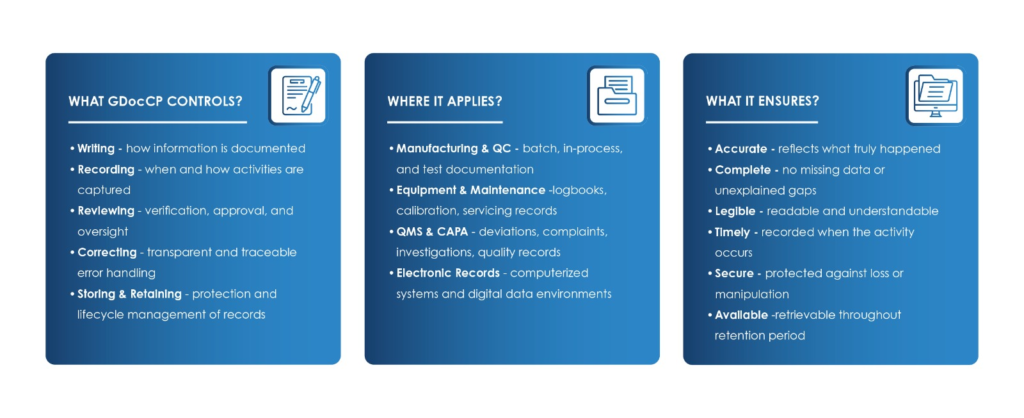
Electronic signatures, audit trails, controlled versioning, and role-based access controls help manufacturers demonstrate procedural integrity more consistently during inspections and reviews.
Lack of real-time production visibility
Many manufacturers still rely on status meetings, emails, or manual follow-ups to understand where batches stand. This creates a gap between what is happening on the shop floor and what teams can see.
A deviation may already be impacting production before escalation occurs. A review backlog may be building without visibility. Shift handovers often depend on verbal updates, which leads to reactive decisions.
Batch Record Management platforms provide real-time visibility into manufacturing progress, batch status, exception events, and workflow bottlenecks as they happen. Supervisors and leadership teams can identify issues earlier, prioritize faster, and intervene before small execution gaps become release delays.
Inefficient deviation and investigation management
Deviation investigations often become time-consuming because teams must manually reconstruct what happened.
Investigators review paper records, compare timestamps, trace operator actions, and reconcile data across systems. This slows CAPA execution and increases operational disruption.
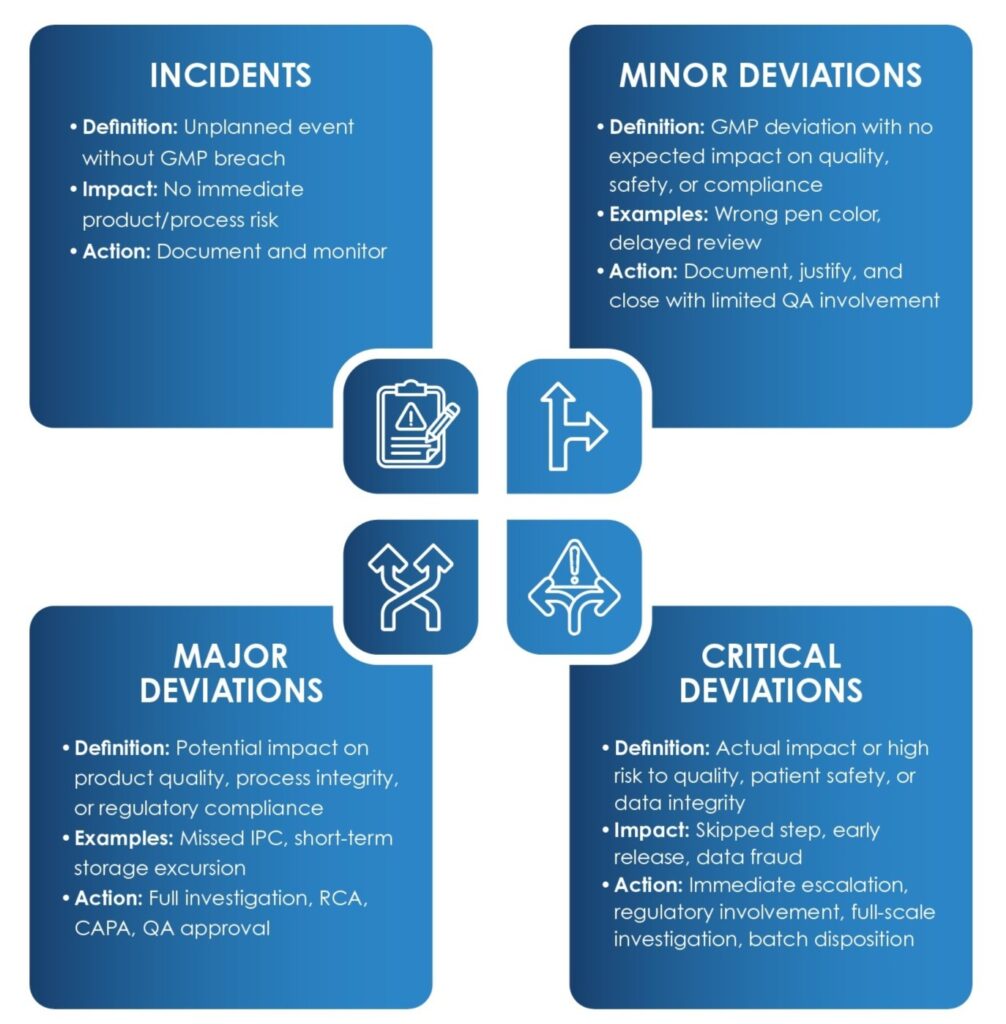
eBMR systems improve investigation efficiency by creating connected, traceable execution records across the manufacturing lifecycle.
Events can be flagged immediately. Process data becomes easier to retrieve. Deviations can be linked directly to affected workflow steps, materials, or equipment. This shortens investigation timelines and improves the quality and consistency of root-cause analysis.
Poor cross-functional coordination
Batch execution rarely depends on one department alone.
Production, QA, QC, warehouse, and manufacturing leadership teams all contribute to release readiness. In many organizations, information still moves through emails, phone calls, printed documents, and disconnected trackers.
As priorities shift, teams may work from different versions of the same information. That creates delays, confusion, and unnecessary rework.
A centralized eBMR environment creates a shared operational view across functions. Teams can access the same batch status, workflow progress, approvals, and exception updates in real time, improving coordination and reducing execution variability.
Limited scalability across sites
As pharmaceutical organizations expand across multiple facilities, maintaining consistency becomes increasingly difficult. Different plants may interpret procedures differently, use different documentation practices, or manage reviews with varying levels of rigor.
Standardization relies heavily on manual governance. Organizations need eBMR platforms to scale manufacturing processes with standardized templates, centralized workflows, and consistent execution.
This supports enterprise-wide consistency while still allowing flexibility for local regulatory and operational requirements. For organizations pursuing Pharma 4.0 initiatives, this becomes especially important.
Conclusion
More than a digitization initiative, eBMR connects manufacturing execution, compliance controls, and operational visibility into a structured, traceable workflow. It does not replace GMP discipline. It strengthens how it is executed, monitored, and sustained.
Explore how CaliberBRM helps pharmaceutical manufacturers reduce manual effort, strengthen compliance, and speed up batch release.