
Every manufacturing batch generates a significant amount of information, from materials and process parameters to equipment records, operator activities, approvals, and quality checks. Managing this information accurately and making it available when needed is essential for maintaining control over the manufacturing process.
Paper-based batch records can make this difficult. Information may be recorded manually, reviewed multiple times, and physically moved between manufacturing and quality teams before a batch can be released. Missing entries, documentation errors, and delayed reviews can add time to an already complex process.
Electronic batch records provide an alternative by bringing batch documentation into controlled electronic workflows. Data can be captured as the batch is executed, system controls can help prevent incomplete records, and relevant information can be made available to reviewers without waiting for physical documents to move between departments.
The result is not simply a paperless process. When implemented effectively, electronic batch records can strengthen compliance, improve traceability, and help reduce the time required to release a batch.
What Change Have Electronic Batch Records Brought?
The most important change is the ability to manage batch information as it is generated rather than treating the completed batch record as something that is reviewed only after manufacturing has finished.
Electronic batch records can capture information in real time and apply controls during execution. Mandatory fields can help prevent required information from being missed. Automated checks can identify values or activities that require attention, while electronic audit trails provide a record of changes and actions performed within the system.
Records can also be stored centrally, allowing authorized users to access current information without searching through physical files.
This changes the role of the batch record from a document that primarily proves what happened to a controlled source of information that can support execution, review, and release.

Strengthening Compliance Through System Controls
Documentation is an important part of pharmaceutical manufacturing compliance. Batch records need to demonstrate that manufacturing activities were performed according to approved procedures, and that required information was recorded accurately and completely.
Paper-based processes rely heavily on individuals to remember each documentation requirement and identify errors during subsequent review. Electronic batch records can introduce controls directly into the workflow.
Electronic records can also simplify audit preparation. Instead of locating physical documents and manually tracing changes, authorized users can access records and electronic audit trails within the system.
For regulated environments, electronic batch record solutions can also be designed to support requirements such as 21 CFR Part 11, when appropriately configured, validated, and operated within the organization’s quality system.
Improving Traceability Across the Batch
Traceability becomes particularly important when a deviation, investigation, or product quality concern requires teams to determine exactly what happened during manufacturing.
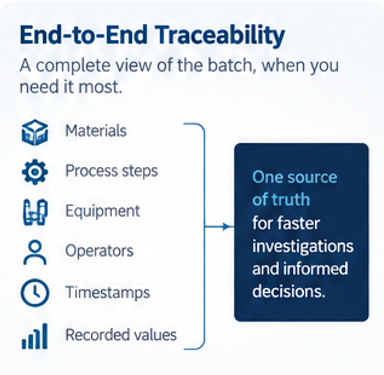
An electronic batch record can connect information across the batch, including materials, process steps, equipment, operators, timestamps, and recorded values.
This creates a more complete view of batch execution.
Instead of searching through multiple documents to determine which material was used, who performed a particular activity or when a process parameter was recorded, teams can access the relevant information electronically.
This can support faster investigations by helping quality and manufacturing teams identify the sequence of events surrounding an issue.
Traceability also becomes important when organizations need to respond to product quality concerns or assess the potential scope of a recall. Having structured and accessible batch information can help teams determine which batches, materials, processes, or activities may be affected.
How Electronic Records Can Accelerate Batch Release
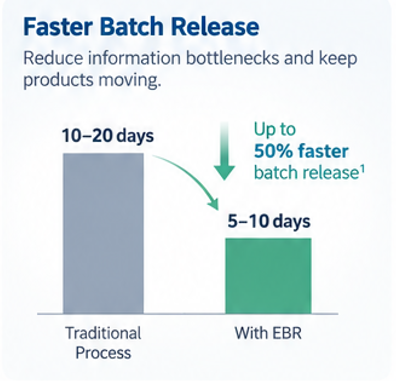
One of the most important opportunities presented by electronic batch records is reducing the information bottlenecks that occur between manufacturing completion and batch release.
With paper records, completed documentation may need to be physically transferred to quality teams before review can begin. Reviewers may then spend significant time checking the record for completeness, verifying entries, and resolving documentation issues.
Electronic batch records remove the need for physical movement of documents.
Quality teams can access records electronically, while different review activities can be performed in parallel where the process and system design allow it. Relevant information can also be visible while the batch is progressing rather than becoming available only after manufacturing is complete.
Another important opportunity is to review by exception.
Instead of treating every data point as requiring the same level of manual scrutiny, validated system controls can help identify exceptions, missing information and values requiring attention. This allows reviewers to focus their time on critical information and events rather than spending the same effort reviewing routine data.
The result can be a more predictable review process and shorter release cycles.
Connecting Batch Records with Shop-Floor Systems
Electronic batch records become even more valuable when they are connected with other systems used across manufacturing operations.
Integration with systems such as MES, ERP, and LIMS can allow relevant production, material, and laboratory information to flow between applications.
Automated data transfer can reduce duplicate data entry and minimize the need for operators or reviewers to manually copy information from one system to another.
This can improve data consistency while reducing the administrative effort associated with batch documentation.
The objective should not be to connect systems simply because integration is technically possible. The focus should be on connecting information that is important for execution, review, traceability, and release.
What Challenges Can Manufacturers Expect?
Moving from paper-based records to electronic batch records can bring significant benefits, but implementation requires careful planning.
Operators who have worked with paper for years may initially be uncomfortable with new workflows. Training therefore needs to focus not only on system functionality but also on how the new process supports their day-to-day activities.
Data migration can also present challenges, particularly when historical information is stored across multiple legacy systems or formats.
For regulated pharmaceutical environments, validation must be planned as part of the implementation rather than treated as an activity that happens at the end. The organization also needs to consider the initial investment required for technology, integration, training, and process redesign.
These challenges do not eliminate the value of digitalization. They highlight the importance of taking a controlled, phased approach.
How Should Manufacturers Get Started?
Organizations that have not yet implemented electronic batch records do not necessarily need to transform every product and manufacturing process at once.
A practical approach can begin with high-volume or high-risk products, where improvements in documentation and release time can have a measurable operational impact.
CaliberBRM helps pharmaceutical manufacturers digitalize batch execution and record management through controlled electronic workflows, supporting batch documentation, review, approvals and traceability.
The value of electronic batch records goes beyond replacing paper. By bringing execution data, controls, review and approvals into a connected process, manufacturers can create a more reliable path from batch execution to release.
Ultimately, electronic batch records can help shift batch release from a document-heavy process that begins after manufacturing ends to a controlled, visible workflow that supports quality and review throughout execution.